

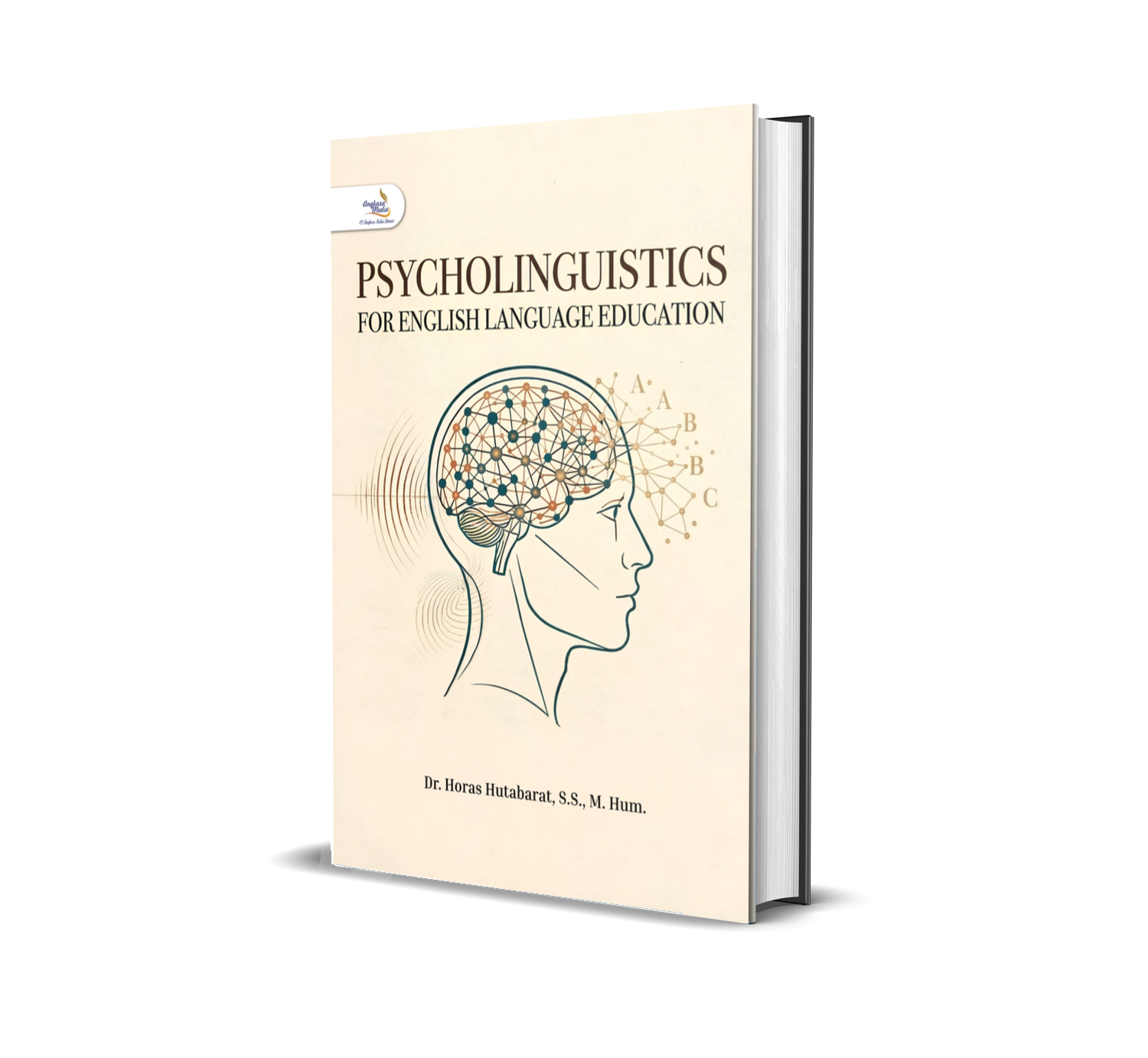
Psycholinguistics For English Language Education invites readers to explore the relationship between language, the mind, and the brain in human communication and language learning. Psycholinguistics brings together perspectives from linguistics and psychology to understand how people acquire, store, comprehend, and produce language. This book introduces these processes in an accessible way while highlighting their relevance to English language education.
The book covers essential aspects of psycholinguistics, including its fundamental concepts and development, the relationship between language and the brain, and the role of cognitive processes in language use. It also explores first and second language acquisition, language processing in listening, speaking, reading, and writing, as well as the connections between language, memory, cognition, bilingualism, and language disorders. These topics provide readers with a broader understanding of the mental and biological processes involved when people use and learn language.
The connection between psycholinguistics and English language education is an important focus of the book. Understanding how learners process information, acquire vocabulary, construct meaning, produce language, respond to linguistic difficulties, and develop a second language can contribute to more meaningful and learner-oriented English instruction. This book is intended for students, lecturers, teachers, and general readers who wish to broaden their understanding of language, cognition, and the processes underlying English language learning.
|
Detail Buku |
|
| ISBN | |
| Penulis | Dr. Horas Hutabarat, S.S., M. Hum. |
| Editor | Parlindungan Pardede |
| Penyunting | Oktari Ana Risapni, S.Sos. |
| Desain Sampul | Ringgalang Alfath Saksaky, S.IP. |
| Ukuran | A5 |
| Jumlah Halaman | 173 |
| Terbit | 2026 |


Ulasan
Belum ada ulasan.